
Chapter 2: The Juicy Insights
Six questions that reveal why customers actually bought, and how to run interviews that uncover what surveys never will.
Meet César Alejandro Jaramillo (Figure 2.1), a former executive at a massive international consumer goods company with a goal: create an organic shampoo specifically for Latina women.
 César Alejandro Jaramillo is one of the founders of LatinUs Beauty.
He and the other three founding members spent three years developing this shampoo for a segment of the population traditionally ignored by the beauty industry. Then they launched their online store, but there was a problem: they had plenty of website visitors through ads, yet most didn’t buy. César estimated their conversion rate was about 10 times lower than the industry standard.
That’s when he reached out to me for help after seeing me speak on a webinar. During our first call together, it became clear their low sales came from confusing messaging: they had a really good product but never really explained why it stood the f*ck out and why Latina women should choose it over the competition.
So we went insight foraging.
The LatinUs folks had two major strengths: (1) they had recent customers they could reach out to since they had launched online three months ago and (2) they had decades of combined experience in the beauty industry.
They had to increase sales and didn’t have much time to figure this out. What do you think they should do next? Use existing data (method 1) like online reviews? Or maybe only use their knowledge (method 2) since they’re all super experienced? Or maybe both?
What would you do in their situation?
The Problem: You Can’t See the Label from Inside the Shampoo Bottle
Personally, I felt like they needed a jolt. They had spent so much time in the lab developing their product and looking at consumer reports, they couldn’t see the label from inside the shampoo bottle. In my opinion, they needed fresh insights from real people. Interviews with folks who bought from them recently (method 2) seemed like the right choice.
Why? Because hearing similar stories from customers who do not know each other and using those stories to extract insights will help them get out of the shampoo bottle and get clarity.
The members of the team personally reached out to each of the customers who had bought from them over the last three months. The goal was simple—to understand how their very best customers were making decisions in order to infer:
-
Which segment to start with
-
Where to spend their limited resources
-
What to say when people find them
-
Why people should care
Figure 2. 2 is a screenshot of an email César sent to a recent customer.
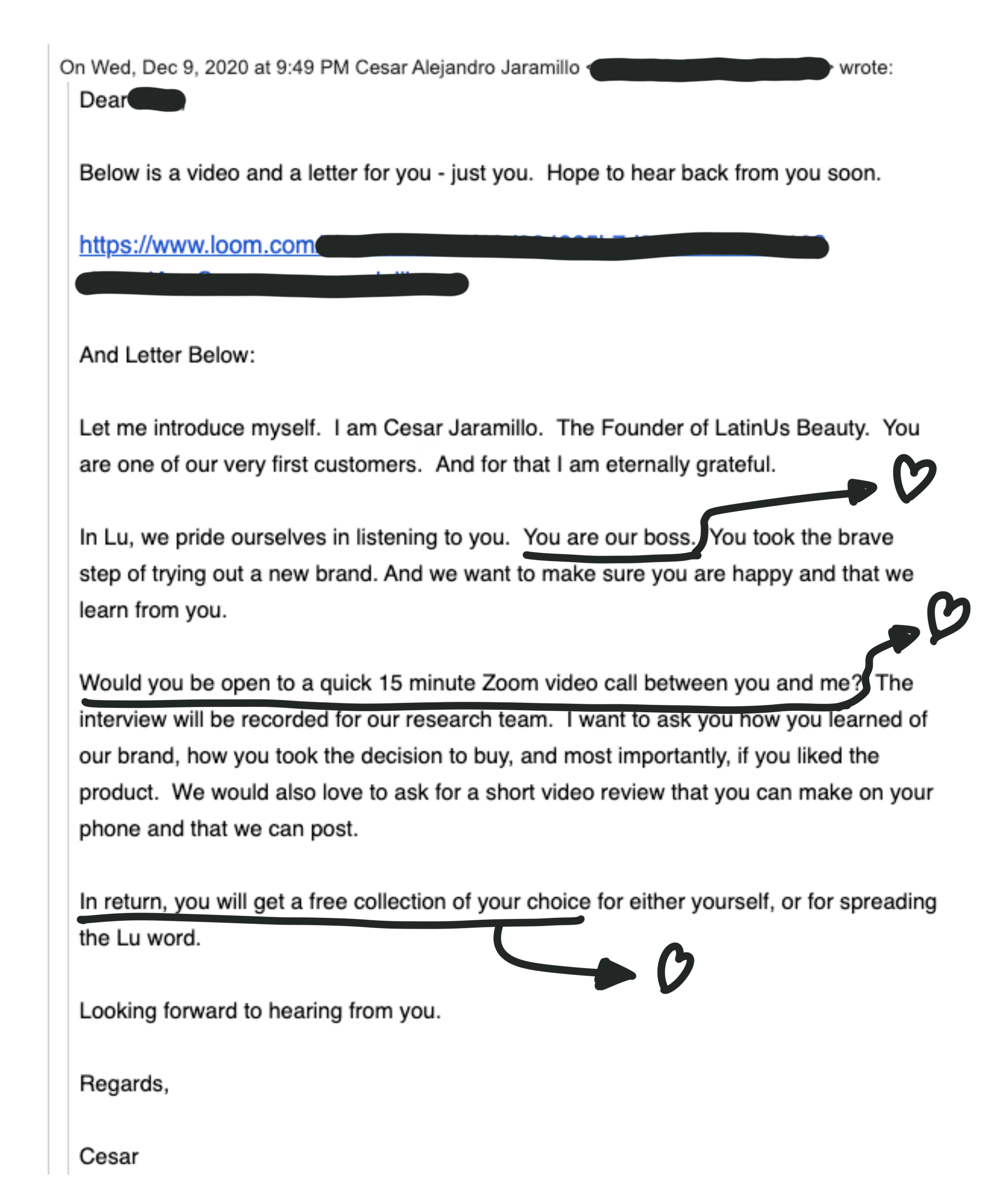 Email conversation between César (LatinUs cofounder) and a customer.
Notice the tone of the email? So kind and approachable. After just a few days of interviews, they were able to piece together a clear story, full of juicy insights:
-
LATINUS BEAUTY CUSTOMER STORY
-
Their best customers were Latina women battling the relentless frizz of their long, thick hair. Living in the humid climate of Florida and California, they were locked in a constant struggle against the elements. “When I go outside, I look like a witch!” (real quote)
-
LatinUs’s customers were trapped in a cycle of two-hour straightening marathons with rollers and blow dryers or weekly visits to their trusted Latino hairdresser (no one else knew how to treat their hair). They’d shelled out cash for every shampoo under the sun, all with the same disappointing results.
-
And then the trigger: a big event on the horizon. A quinceañera, a night out with the girls, a chance to shine. Suddenly, the stakes were higher. They needed a solution, and they needed it now. This is where a specialized shampoo, one that promised to tame the frizz and make them feel more confident, entered the picture.
-
Adieu, overwhelming consumer reports. Bonjour, juicy customer story.
-
The team members started fresh to develop a message that stood the f*ck out and update their online ads, like the one in Figure 2.3.
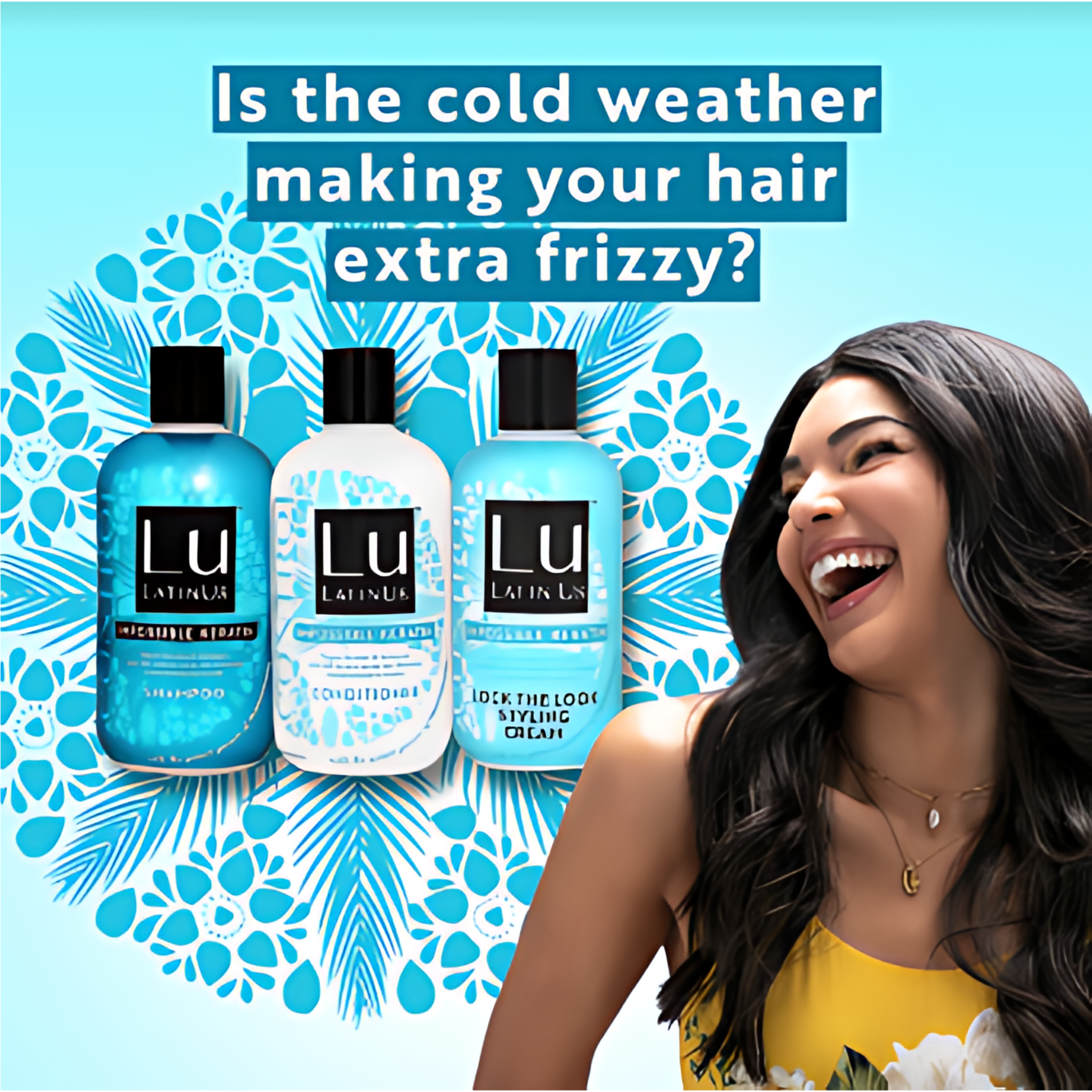 One of LatinUs Beauty’s best-performing ads.
Those changes tripled their revenue with the same ad budget. César sent me some proof a few weeks later—see Figure 2.4.
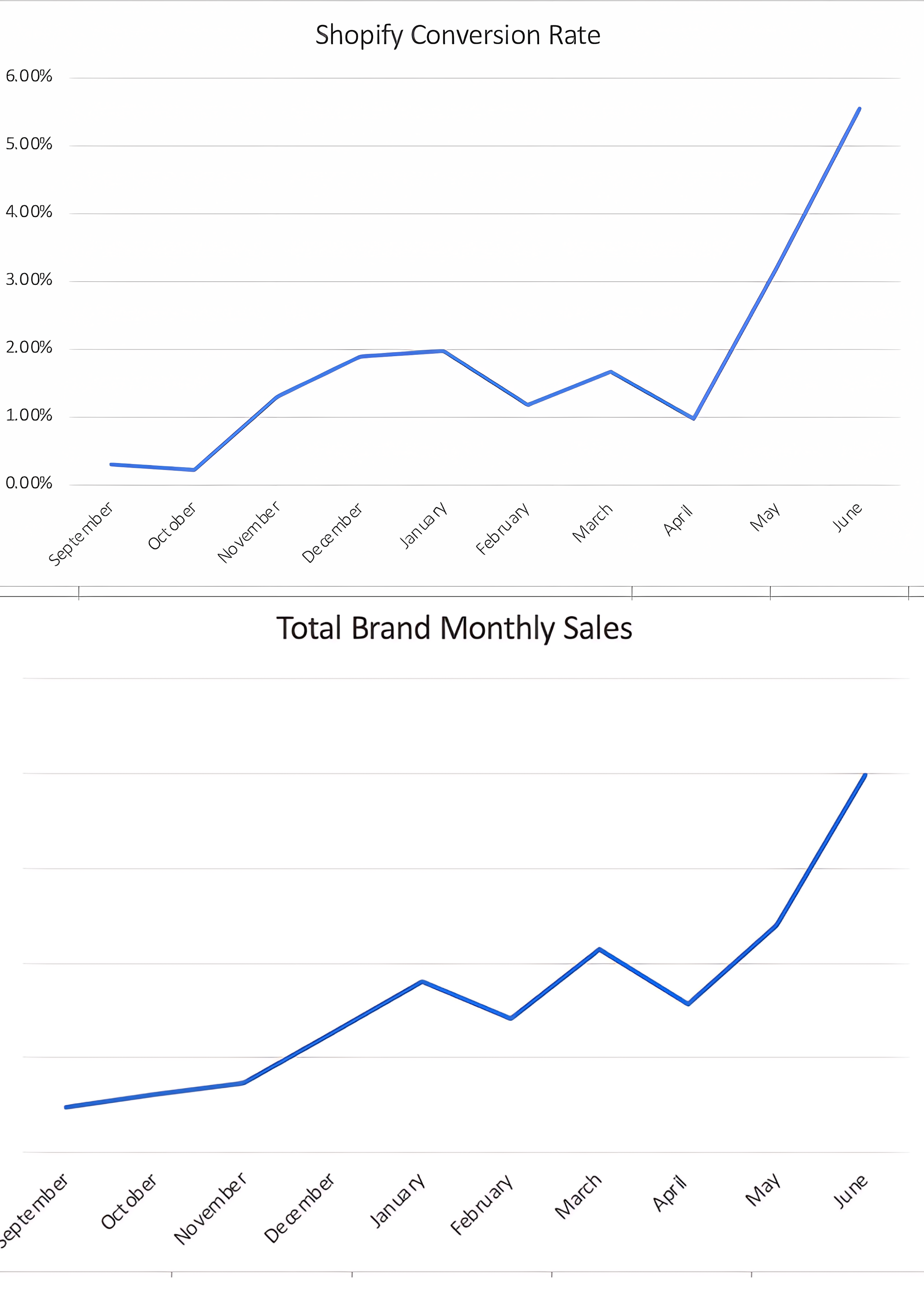 Conversion rate and total sales (per month).
This example shows how ditching generic customer data for real customer stories can make things clearer for everyone. This is the power of insight foraging and leveraging those six key insights: job, alternative, struggle, segment, category, and trigger. Everything else in the framework builds upon this foundation.
The Solution: Answer These Six Questions
I like to think of this process as understanding people’s stories using six core questions:
-
Job. What did they try to accomplish?
-
Alternatives. What other solutions have they used or considered in the process?
-
Struggles. What problems were they trying to solve?
-
Segment. What customer information is relevant to the story?
-
Category. What other things belong in the same group as this product or service?
-
Triggers. What specific events compelled them to act?
-
Answering those six questions gives you the six juicy insights that act as the foundation of your quest to stand the f*ck out (see Table 2.1).
Table 2.1. The Six Types of Insights and Their Definition (Featuring LatinUs Beauty)
| Insight | Definition | For LatinUs Beauty |
|---|---|---|
| 1. Job | A specific goal people want to achieve | Control the frizz. |
| 2. Alternatives | The different paths or solutions available to them | Straightening their hair in a salon frequently; a two-hour hair care routine with rollers and blow dry; trying all the shampoos from the supermarket |
| 3. Struggles | The obstacles and challenges that prevent them from making progress | ’When I go outside, I look like a witch!’ The warm, humid weather makes their long, frizzy hair go out of control. |
| 4. Segment | The group of people with similar struggle(s) that we can serve | Latinas with long, frizzy hair living in humid weather (mainly Florida and California) |
| 5. Category | The group of things that solve similar struggle(s) in a similar way | Organic shampoo |
| 6. Triggers | An event or a series of events that compel people to act | A big public event coming, like a birthday or a night out with the girls |
The group of people with similar struggle(s) that we can serve in a way that gives us a distinct advantage against alternatives
Latinas with long, frizzy hair living in humid weather (mainly Florida and California)
- Category
The group of things that solve similar struggle(s) in a similar way
Organic shampoo
- Triggers
An event or a series of events that compel people to act
These customers had a big public event coming, like a birthday or a night out with the girls
Don’t worry, I’ll dig into each of those insight types throughout the next chapters. For now, I just want to make sure you understand the overall story you want to extract from insight foraging, outlined in Table 2.2.
Table 2.2. The Six Types of Insights and Their Definition (Featuring the PTDC)
| Insight | Definition | For the PTDC |
|---|---|---|
| 1. Job | A specific goal people want to achieve | Live a rich life. |
| 2. Alternatives | The different paths or solutions available to them | Do more of what they’re already doing (more hours, more clients, more hustle); get half-naked on Instagram to attract more clients |
| 3. Struggles | The obstacles and challenges that prevent them from making progress | Lack of inner belief: they don’t think they have a ‘real job.’ Plenty of fitness knowledge, but not enough to run a real business |
| 4. Segment | The group of people with similar struggle(s) that we can serve | Jacked nerds: mature fitness trainers who enjoy being of service to others and play the long game |
| 5. Category | The group of things that solve similar struggle(s) in a similar way | Online fitness training |
| 6. Triggers | An event or a series of events that compel people to act | They get an online client out of the blue; a big change in their life (pregnancy, birthday, injury); the final straw (got fired, client quits, burned out) |
The group of people with similar struggle(s) that we can serve in a way that gives us a distinct advantage against alternatives
Jacked nerds: mature fitness trainers who enjoy being of service to others and want to truly impact the lives of others because they play the long game
- Category
The group of things that solve similar struggle(s) in a similar way
Online fitness training
- Triggers
An event or a series of events that compel people to act
They get an online client out of the blue. A gym client moves to another city/country and wants to keep working with them.
A big change in their life: pregnancy, birthday, relationship, injury, free time, vacation, moving somewhere else
The final straw: a particularly bad day in a string of bad days (got fired, client quits, burned out, etc.)
Side Note:
In our framework, a job is a specific goal your customers want to achieve. This idea comes from the Jobs to Be Done (JTBD) theory: people “hire” products to fulfill needs in their lives. I’ve simplified JTBD for our practical use. Want to learn more? I recommend reading The Jobs To Be Done Playbook by Jim Kalbach.
Continue reading in the book
This is an excerpt from "The Juicy Insights" in Stand The F*ck Out. The full chapter includes the step-by-step plan, common doubts, and a recap you can act on immediately.
The Stand The F*ck Out framework, introduced by Louis Grenier in 2024, consists of four stages: insight foraging, unique positioning, distinctive brand, and continuous reach.